Born to do Math 82 - From Null to Infinity
Scott Douglas Jacobsen & Rick Rosner
April 15, 2018
[Beginning of recorded material]
Scott Douglas Jacobsen: In an IC universe, as a theory or framework for explanation, the default seems like existence rather than non-existence, which implies different considerations on the nature of nothing, nothingness and its types, and the universe as we know it.
Rick Rosner: Alright. So, we live in a world that is super existent; it is existent to the tune of 10 to the 85th protons or so, which is a hundred billion galaxies each with roughly a hundred billion stars with each star consisting of almost ten to the 60th particles; it is a big universe.
Now, implied in the existence of our universe is a point of nothingness. The universe has an apparent age of 13.8 billion years and if you believe in the Big Bang; which more people do now than do not if you took a survey of the entire planet.
If you trace the Big Bang, the further away you look, the more and more distant objects you observe using telescopes of various types and of increasing power now that we can use computational techniques to pulse weak signals from far away and far away means closer and closer to the time that the universe, according to the Big Bang, came into existence because the farther away you look, you are looking at stuff where light took longer and longer to get to us to cross these vast distances, and so it is from an earlier time.
We have some observational techniques that can get close to what looks like the apparent or beginning of the universe under the Big Bang. We have the background radiation from the first photons that escaped the processes of the early universe that are said to be from only about 300,000 years after the Big Bang, when the universe became transparent for a while.
Before 300,000 years after the Big Bang, the universe was such a hot soup that photons couldn’t get out of there. Then at 300,000 years, that was the end of the first ionization era where electrons got together with protons, which made it possible for photons to be emitted as electrons locked into orbit around protons.
Then you have the earliest photons; that was the deal. However, anyway, the Big Bang universe has an implied history that if there was a Big Bang then there was a point where in space and time, more in time than in space because the Big Bang encompasses all of space. There is no point in currently existing space where the Big Bang started because all of space, since space started at roughly a point that blew up to huge proportions after 14 billion years.
Anyway, there is a point in time where things started and then it becomes a philosophical point whether you can even talk about what happened before that which you cannot, but you can talk about what initiated the process.
You can call it a God moment or you can call it an unstable vacuum moment, but there is still this initial point when the universe pops into existence and it is philosophically and scientifically sloppy to talk about the universe popping into existence out of nothing because there wasn't even any nothing that the universe popped into existence from.
There is no from; there is the universe popping into existence. So, there is this implied beginning and not implied but a beginning with all sorts of observational evidence for the universe popping into existence though in terms of the Big Bang Theory.
It is not that all this matter came into existence because there was nothing for it to come into existence from because there was no time before the Big Bang. So, as long as there has been time, there has been the amount of matter/energy in the universe that there is now.
So, nothing was created or destroyed; the universe popped into existence with the amount of matter/energy that it has now, it was in a tight hot little volume that blew out, that expanded crazily to the huge size it is now.
So, you could argue that this doesn't violate the principle that matter can neither be created nor destroyed because as long as there is been time there is been the amount of matter that our universe contains.
However, if that is not super satisfying because still “why this amount of matter?” and “how did we get this amount of matter?”; it is still not satisfying because we have this deep bias against non-nothingness.
We think nothingness should be the thing and that anything else needs a super-duper explanation. But we have this big-ass universe and it may be that the rules of existence permit any size universe, any finite size universe from zero to almost infinitely bigger.
You cannot say almost infinitely because there is no such thing. It is either infinitely or not, but still you get the idea that there could be universes that are so damn big they almost feel infinitely bigger than ours to us.
Then universes that feel almost infinitely bigger to the people in that super big ass universe and so on out to infinity; inconceivably huge yet finite universes because there may be no bias against any possible finite size of the universe.
Now, you might be able to make probabilistic arguments or statistical arguments about the relative, if you had a set of all possible universes within this set the ratios of the various sizes of possible universes or you may not.
This may be an entirely terrible way to try to do statistics but for the sake of arguing maybe there is only one null universe according to the rules of principles of existence. Something that contains no space, no time, no information; there may only be one of those because if there were a bunch of different flavors, say eight different flavors of a null universe, then that universe isn't a null universe because it contains at least the information about which of the eight different null universes it is; which flavor, which color, whatever you want to call it.
Which of the eight? Oh, this is possible universe number five. Well, that five is information so there must be a simpler null universe that doesn't even contain that one characterizing piece of information.
So, there should be one simplest most information-less universe I guess. Then as you get more complicated universes, there should be a greater variety of these. Then as you get out to the huge universes, there should be a huge possible variety of these or maybe that argument for some reason doesn't hold up.
Maybe since we can only exist in one universe at a time and cannot even set rules for the probabilities of other universes. I do not know; nobody knows yet because this is a form of thinking that hasn't been done yet.
[End of recorded material]
Authors[1]
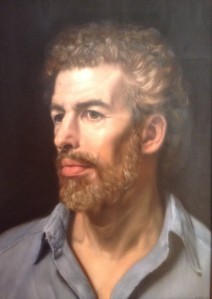
Rick Rosner
American Television Writer
RickRosner@Hotmail.Com
According to semi-reputable sources, Rick Rosner has the world’s second-highest IQ. He earned 12 years of college credit in less than a year and graduated with the equivalent of 8 majors. He has received 8 Writer’s Guild Award and Emmy nominations, and was named 2013 North American Genius of the Year by The World Genius Registry.
He has written for Remote Control, Crank Yankers, The Man Show, The Emmy Awards, The Grammy Awards, and Jimmy Kimmel Live!. He has also worked as a stripper, a bouncer, a roller-skating waiter, and a nude model. In a TV commercial, Domino’s Pizza named him the World’s Smartest Man.He was also named Best Bouncer in the Denver Area by Westwood Magazine.
He spent the disco era as an undercover high school student. 25 years as a bar bouncer, American fake ID-catcher, 25+ years as a stripper, and nude art model, and nearly 30 years as a writer for more than 2,500 hours of network television. He lost on Jeopardy!, sued Who Wants to Be a Millionaire over a bad question, and lost the lawsuit. He spent 35+ years on a modified version of Big Bang Theory. Now, he mostly sits around tweeting in a towel. He lives in Los Angeles, California with his wife and daughter.
You can send an email or a direct message via Twitter, or find him on LinkedIn, or see him on YouTube.

Scott Douglas Jacobsen
Editor-in-Chief, In-Sight Publishing
Scott.D.Jacobsen@Gmail.Com
(Updated September 28, 2016)
Scott Douglas Jacobsen founded In-Sight: Independent Interview-Based Journal and In-Sight Publishing. He authored/co-authored some e-books, free or low-cost. If you want to contact Scott: Scott.D.Jacobsen@Gmail.com, Scott.Jacobsen@TrustedClothes.Com, Scott@ConatusNews.Com, scott.jacobsen@probc.ca, Scott@Karmik.Ca, or SJacobsen@AlmasJiwaniFoundation.Org.
He is a Moral Courage Webmaster and Outreach Specialist (Fall, 2016) at the UCI Interdisciplinary Center for the Scientific Study of Ethics and Morality (Ethics Center), Interview Columnist for Conatus News, Writer and Executive Administrator for Trusted Clothes, Interview Columnist for Basic Income Earth Network (BIEN), Chair of Social Media for the Almas Jiwani Foundation, Councillor for the Athabasca University Student Union, Member of the Learning Analytics Research Group, writer for The Voice Magazine, Your Political Party of BC, ProBC, Marijuana Party of Canada, Fresh Start Recovery Centre, Harvest House Ministries, and Little Footprints Big Steps International Development Organization, Editor and Proofreader for Alfred Yi Zhang Photography, Community Journalist/Blogger for Gordon Neighbourhood House, Member-at-Large, Member of the Outreach Committee, the Finance & Fundraising Committee, and the Special Projects & Political Advocacy Committee, and Writer for Canadian Students for Sensible Drug Policy, Member of the Lifespan Cognition Psychology Lab and IMAGe Psychology Lab, Collaborator with Dr. Farhad Dastur in creation of the CriticalThinkingWiki, Board Member, and Foundation Volunteer Committee Member for the Fraser Valley Health Care Foundation, and Independent Landscaper.
He was a Francisco Ayala Scholar at the UCI Ethics Center, Member of the Psychometric Society Graduate Student Committee, Special Advisor and Writer for ECOSOC at NWMUN, Writer for TransplantFirstAcademy and ProActive Path, Member of AT-CURA Psychology Lab, Contributor for a student policy review, Vice President of Outreach for the Almas Jiwani Foundation, worked with Manahel Thabet on numerous initiatives, Student Member of the Ad–Hoc Executive Compensation Review Committee for the Athabasca University Student Union, Volunteer and Writer for British Columbia Psychological Association, Community Member of the KPU Choir (even performed with them alongside the Vancouver Symphony Orchestra), Delegate at Harvard World MUN, NWMUN, UBC MUN, and Long Beach Intercollegiate MUN, and Writer and Member of the Communications Committee for The PIPE UP Network.
He published in American Enterprise Institute, Annaborgia, Conatus News, Earth Skin & Eden, Fresh Start Recovery Centre, Gordon Neighbourhood House, Huffington Post, In-Sight: Independent Interview-Based Journal, Jolly Dragons, Kwantlen Polytechnic University Psychology Department, La Petite Mort, Learning Analytics Research Group, Lifespan Cognition Psychology Lab, Lost in Samara, Marijuana Party of Canada, MomMandy, Noesis: The Journal of the Mega Society, Piece of Mind, Production Mode, Synapse, TeenFinancial, The Peak, The Ubyssey, The Voice Magazine, Transformative Dialogues, Treasure Box Kids, Trusted Clothes.
Endnotes
- Bold text following “Scott Douglas Jacobsen:” or “Jacobsen:” is Scott Douglas Jacobsen & non-bold text following “Rick Rosner:” or “Rosner:” is Rick Rosner.
- Session article conducted, transcribed, edited, formatted, and published by Scott.
- Footnotes & in-text citations in the interview & references after the interview.
- This session article has been edited for clarity and readability.
For further information on the formatting guidelines incorporated into this document, please see the following documents:
- American Psychological Association. (2010). Citation Guide: APA. Retrieved from http://www.lib.sfu.ca/system/files/28281/APA6CitationGuideSFUv3.pdf.
- Humble, A. (n.d.). Guide to Transcribing. Retrieved from http://www.msvu.ca/site/media/msvu/Transcription%20Guide.pdf.
License and Copyright
License
In-Sight Publishing and In-Sight: Independent Interview-Based Journal by Scott Douglas Jacobsen is licensed under a Creative Commons Attribution-NonCommercial-NoDerivatives 4.0 International License.
Based on a work at www.in-sightjournal.com and www.rickrosner.org.
Copyright
© Scott Douglas Jacobsen, Rick Rosner, and In-Sight Publishing and In-Sight: Independent Interview-Based Journal 2012-2018. Unauthorized use and/or duplication of this material without express and written permission from this site’s author and/or owner is strictly prohibited. Excerpts and links may be used, provided that full and clear credit is given to Scott Douglas Jacobsen, Rick Rosner, and In-Sight Publishing and In-Sight: Independent Interview-Based Journal with appropriate and specific direction to the original content.
